Bhop Jump
The first real Source-style bunny-hop on mobile — movement ported from the engine up, sold on the faithfulness of its feel.
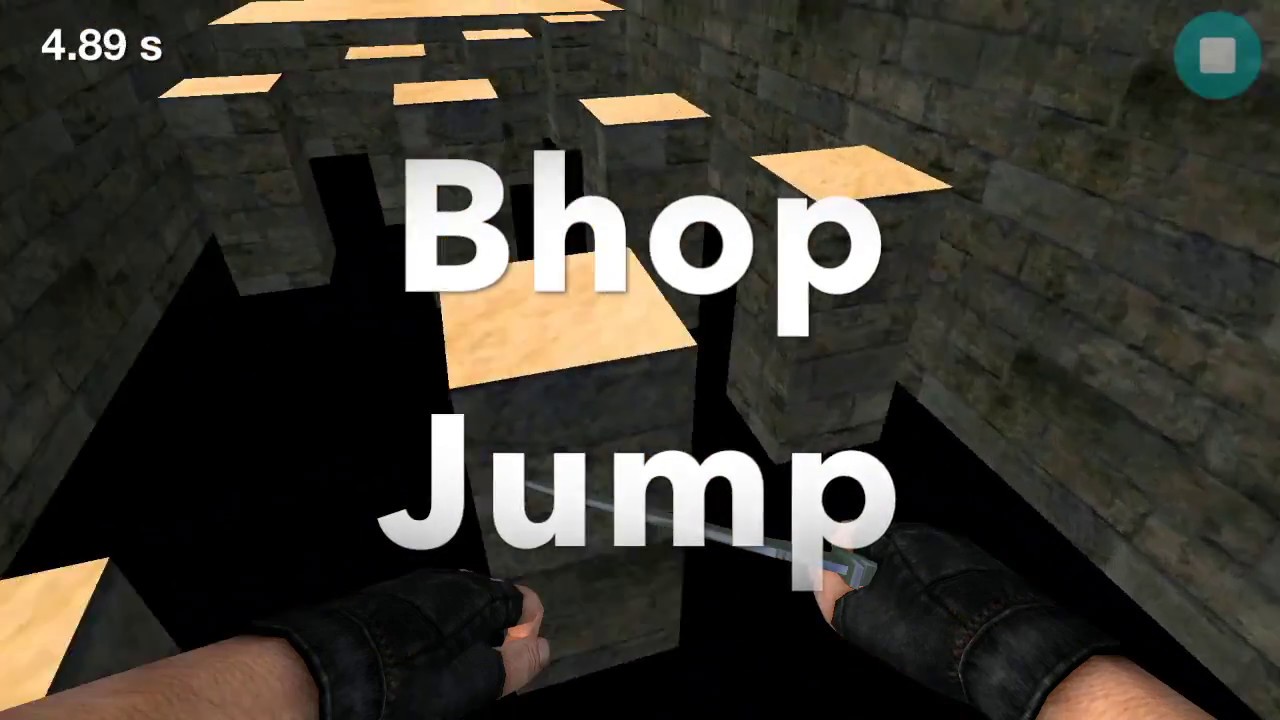
Overview
Bhop Jump is a competitive mobile game built around bunny-hopping — the Source-engine movement skill where precise jump timing and air-strafing let you accelerate and carry speed through a map. It was a commission. A client came with one clear demand: bring real bhop to phones. At the time nobody had — there was a single earlier attempt and it was broken. The challenge was not making "a runner"; it was making the actual mechanic feel authentic on a touchscreen. It shipped on iOS and Android in 2017 and earned **$160K+ in Q1 alone** — almost entirely from rewarded ads — on roughly 100K downloads.
The brief — and the hidden dragon
The game was produced under DragonGameStudios (hence the com.dgs.bhop bundle id). The client wanted it on their own account, and paid a 50% premium to white-label it — no studio logo, no mention of DragonGameStudios anywhere.
They agreed to one thing: a custom menu backdrop. So the backdrop is a CS screenshot — with the studio's dragon quietly worked into a doorway. The client paid to erase the studio, and the dragon has been sitting in that doorway ever since.
The logo leans on the same source: a counter-terrorist mid-jump with a knife, cut by hand out of a Counter-Strike 1.6 screenshot, flattened onto a single fill and — after a palette pass in Figma — set in white on dark grey because it simply read best as an iOS icon.
What bunny-hopping actually is
In Source games, you don't just run — you jump repeatedly and steer in the air. Time each landing-to-jump correctly, strafe in sync with the camera, and you gain speed instead of losing it. Done well, you flow through a map far faster than running; done badly, you stall. That's the whole appeal: a high skill ceiling hidden behind a simple input. It rewards consistency, not reflexes. Translating that to mobile — without dumbing it into yet another auto-runner — was the entire project.
Porting Source movement to Unity
You can't fake bhop. If the acceleration curves, friction, air-control and timing windows don't match what players' muscle memory expects, it feels wrong instantly. So the movement wasn't "inspired by" Source — it was ported from it. I pulled the engine's real metrics, character dimensions and movement behaviour, converted Source units into Unity units, and effectively rewrote that physics in Unity so the acceleration and air-strafing behaved like the genuine article. Getting the numbers and timing windows faithful was the hardest single piece of engineering in the game.
Mobile controls — one concession
The touch scheme is deliberately minimal. The only real mobile accommodation is an **auto-jump** — the game hops for you, so your fingers are free for the part that matters. Beyond that: the left and right edges of the screen are your turns, and that's it. Everything hard stays hard. The skill gap isn't in the controls — it's in the **consistency of movement**: holding the line, hitting the timing, carrying speed lap after lap.
Three modes
The game splits three ways, spent in BP (the in-game points). **Bhop Classic** is the core — faithful bhop on the ported community maps. **Bhop Speed** is its stylised counterpart, a neon wireframe tunnel stripped down to pure speed and timing. **Multiplayer** is the eight-player sessions covered below.
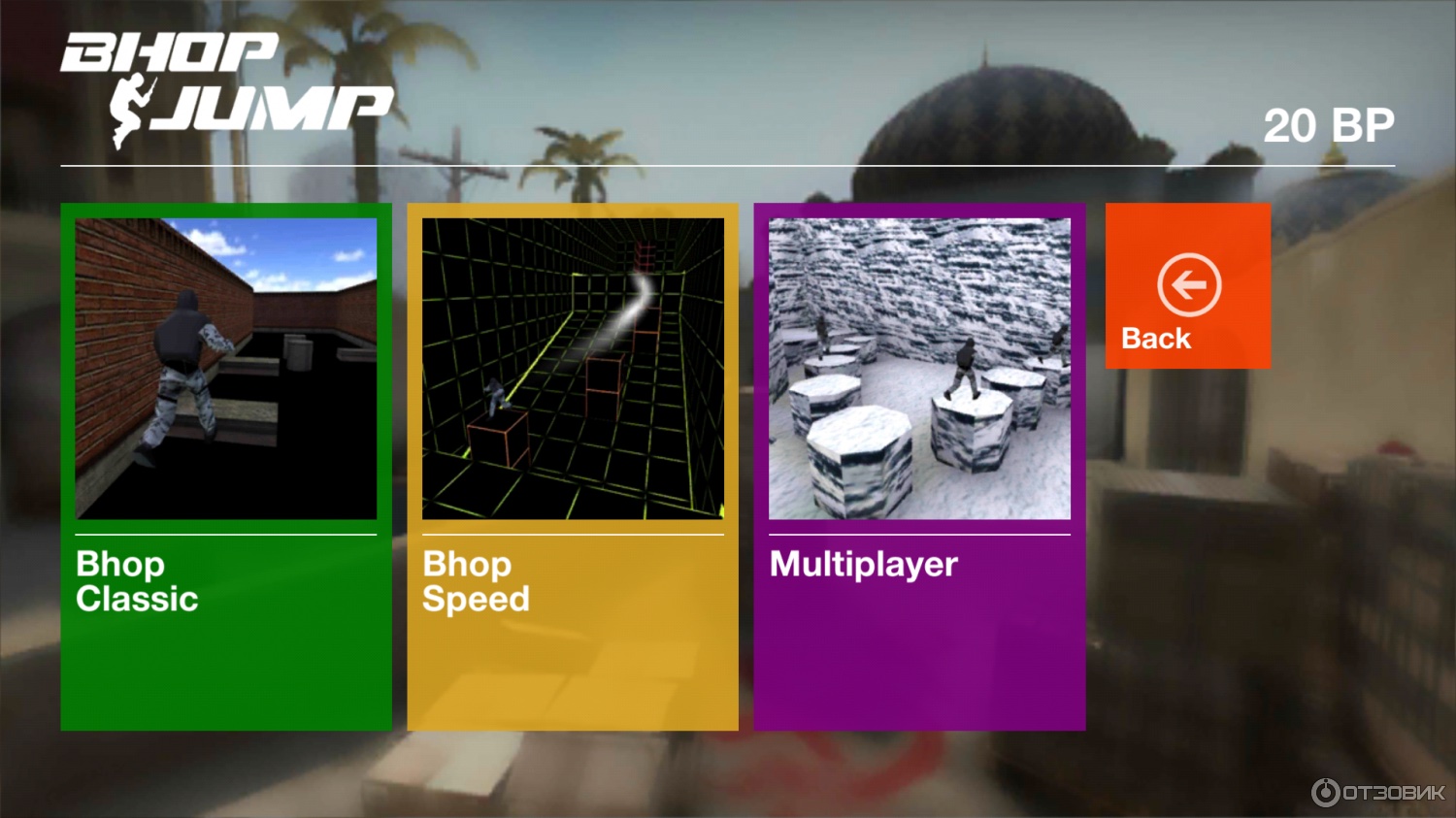
Maps: community classics, rebuilt by hand
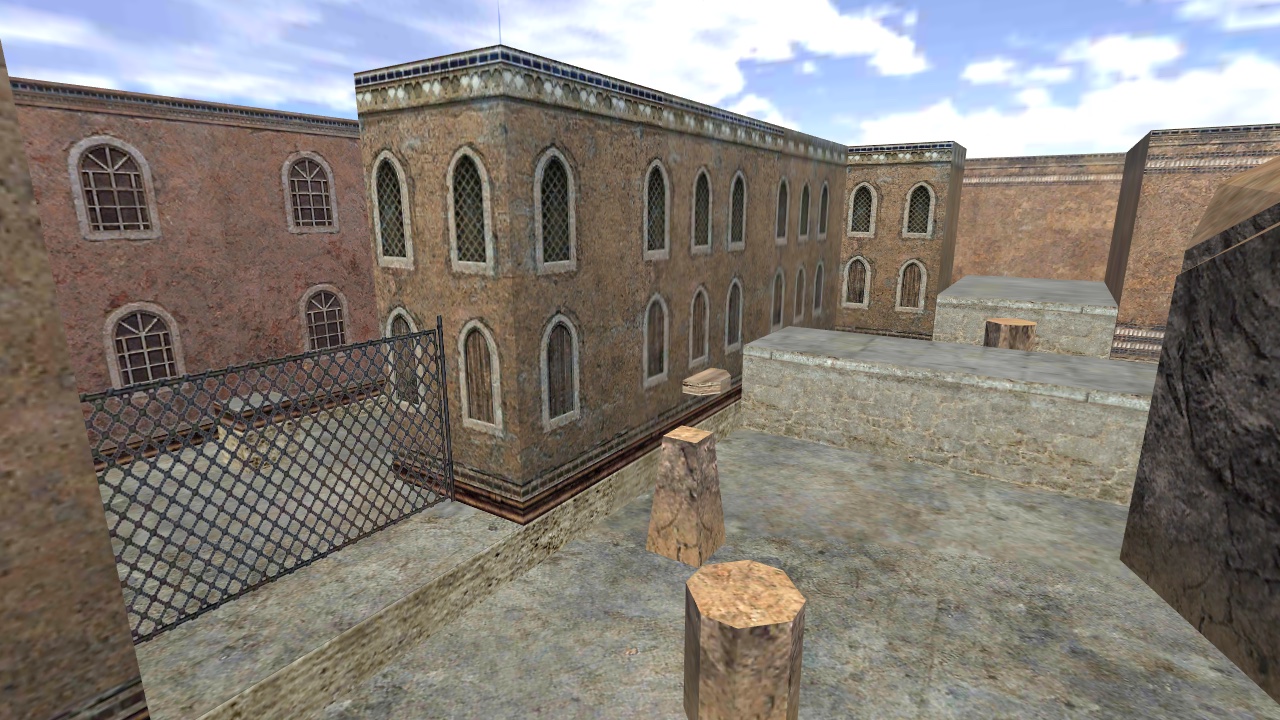
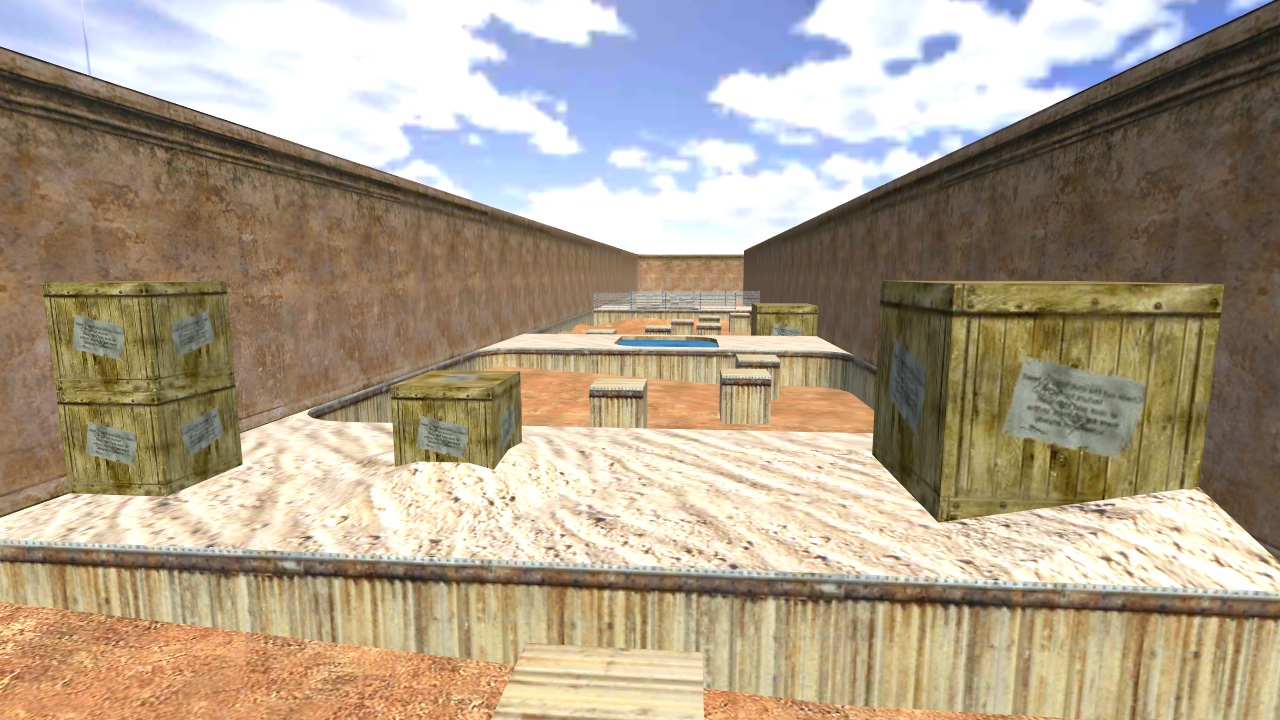
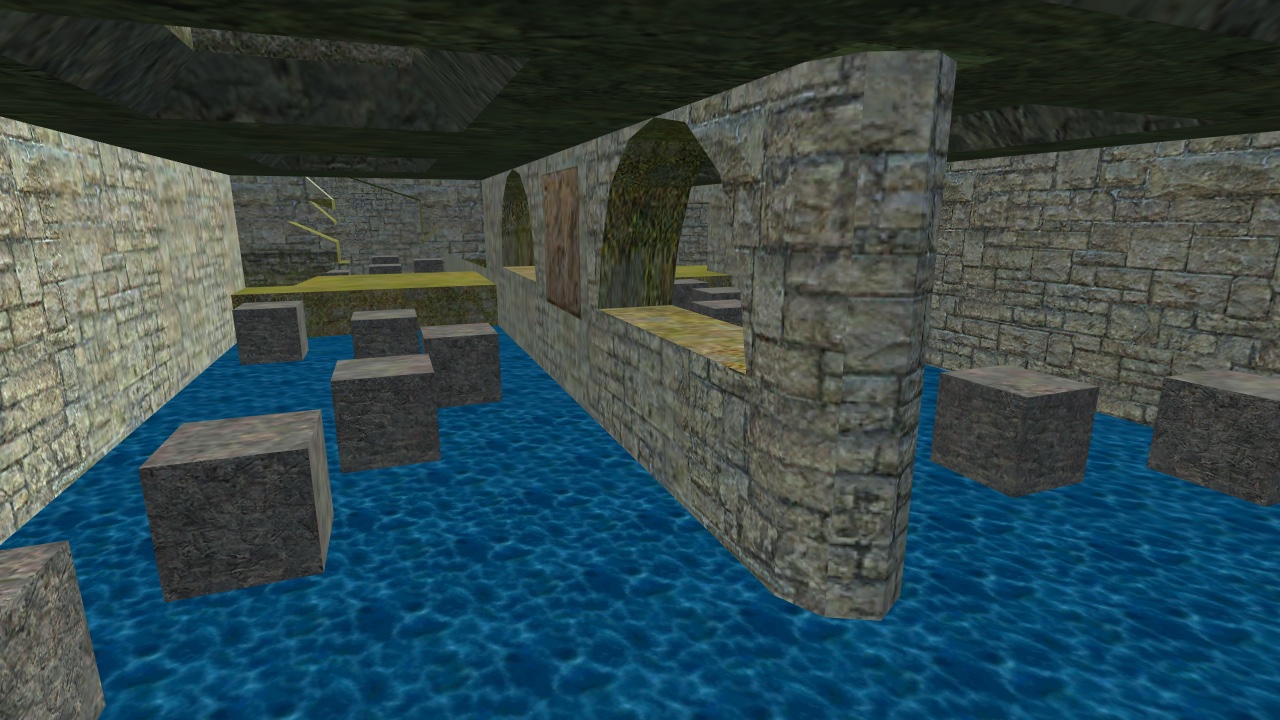
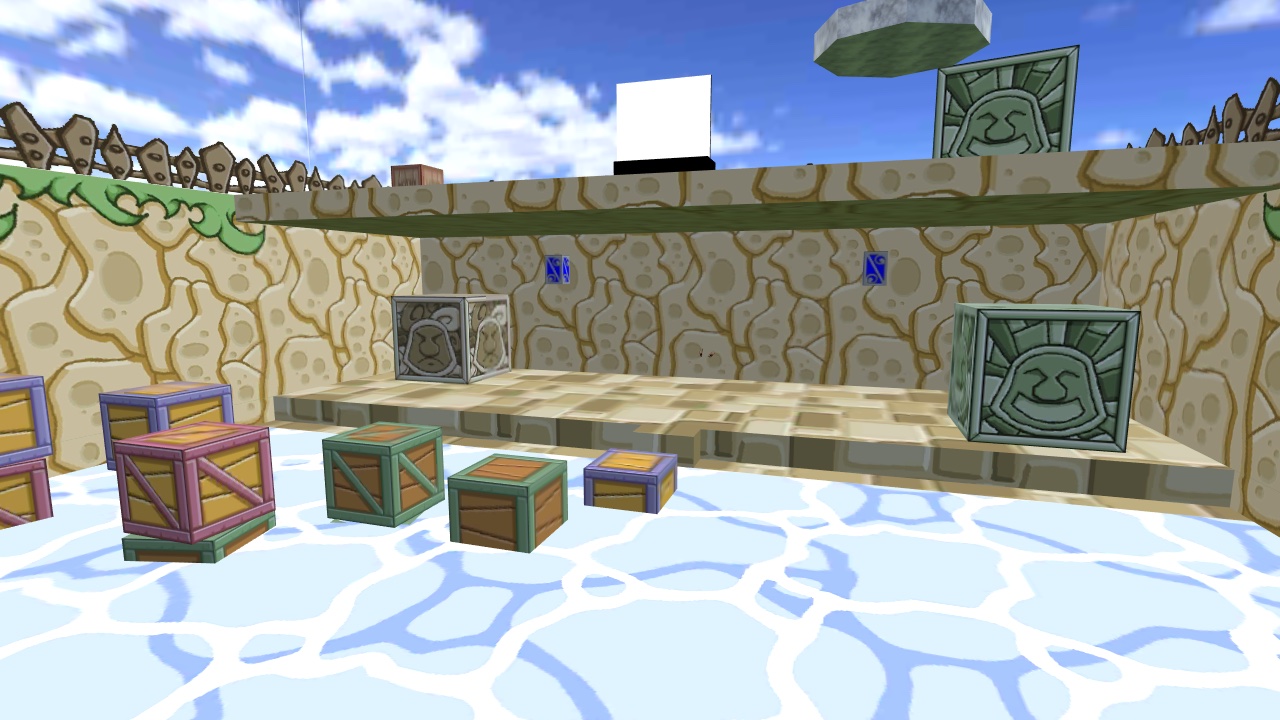
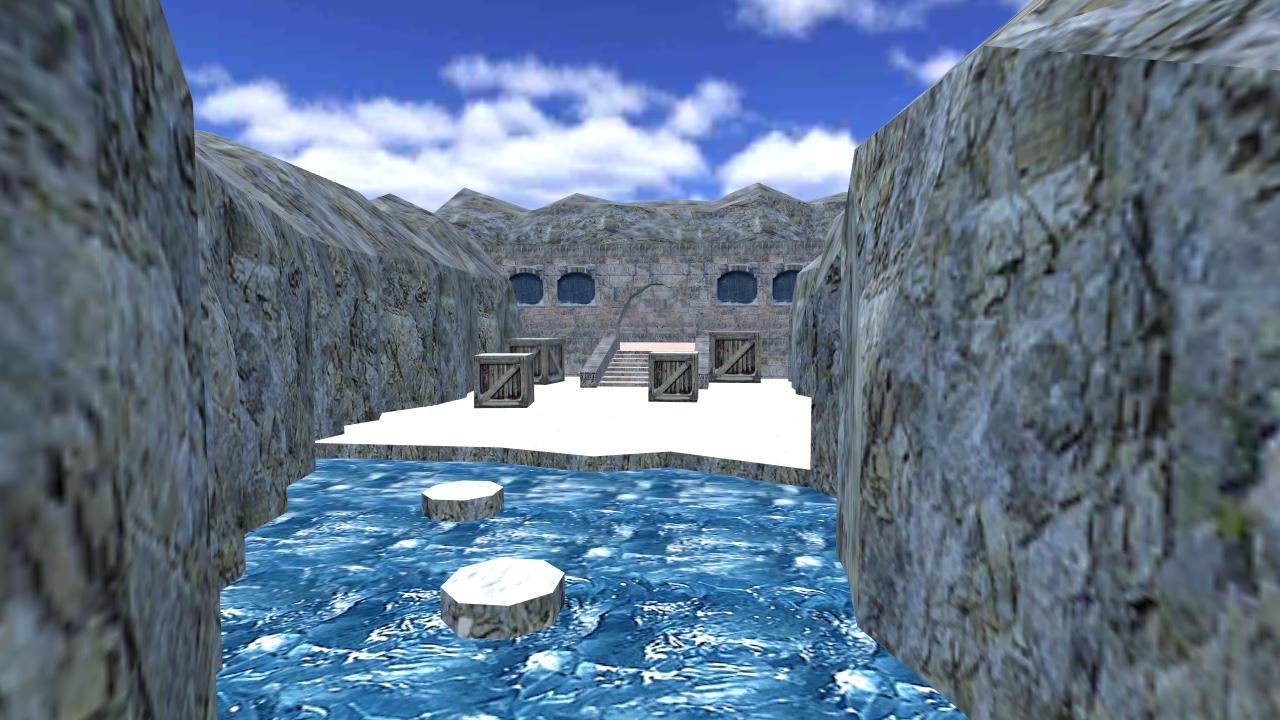
The maps are named community bhop maps — the ones players already knew. Using them meant tracking down their authors for permission, which was its own saga: many never replied, so the game ships a DMCA notice with contacts in-world, in case any creator ever objected. Bringing each map in was manual, laborious work. Maps were extracted as raw models and textures, then rebuilt in Unity by hand — meshes, materials reworked for Unity's renderer, lighting placed by eye, triggers and start/finish zones wired up per map. Multiply that by a full roster, sorted into subjective difficulty tiers. This was the most time-consuming part of the whole project.
Multiplayer
Movement this precise is brutal to synchronise — a few milliseconds of desync turns a clean run into teleporting. The netcode runs on Unity + Photon: a master server handles connection and matchmaking, a host spins up a session for up to eight players, and everyone runs on a shared tick. Remote players are interpolated (lerped) between authoritative updates, which keeps movement smooth on every screen instead of stuttering with the network.
Cosmetics & economy
Progression is cosmetic — skins, pulled from crates on honest random odds (the base loadout, a pair of gloves and a knife, drops as two separate items). I modelled and textured the skins myself in Marmoset and Maya, painting directly onto the finished models to get the textures sitting right. BP — the in-game points — open crates, and you earn it by playing: clearing maps against the clock, taking part online, or buying it outright via in-app purchases.
Monetization & growth
The money model was ads plus IAP, and the split is the interesting part: **rewarded ads were the engine** — the bulk of the $160K+ — while in-app purchases were only about 5% of total revenue. Launch marketing was lean: roughly $1.5K spent on targeted ads across niche subreddits, Google and Facebook. The bhop community and store discovery did the rest. The Google Play trailer was deliberately unfancy too — about ninety seconds of raw gameplay with a Celldweller track laid over the top.
War stories
- Sitting at 3 a.m. on Skype talking an American CSGO mapmaker into letting his map into the game.
- Hand-fighting Marmoset and Maya to make custom skins sit right — painting straight onto the finished model.
- Three weeks after launch, getting served a YouTube recommendation for a review of my own game by some random kid — the algorithm pitching me back the thing I'd just shipped.
Outcome
After the revenue split and three months of support, the game was handed over to the client. There was apparently some drama afterward that I wasn't part of, and I can't vouch for what the project became — plenty of people said it went downhill once it changed hands. What I keep from it is the engineering: a genuinely hard PC movement mechanic, ported faithfully enough to feel real on a phone, on a roster of hand-rebuilt maps — and a product that found an audience and made money on the strength of that faithfulness.
Takeaways
Bhop Jump worked because it refused the easy version. The whole bet was that the niche, demanding feel of real bunny-hopping was worth porting exactly — not approximating — and that an audience would pay for the genuine article on a platform that had never had it. The hard parts were unglamorous: matching engine physics down to the units, and rebuilding every map by hand. But that fidelity was the product. It's a reminder that for skill-based mechanics, "close enough" isn't — the feel is the feature.